How we built Clinizy Care
Clinizy Care is AI-powered hospital management software for India's clinics, nursing homes and small hospitals. Brynex Labs designed it, built it and runs it. This is the builder's story: the problem, what we built, how it fits together, and what running it has taught us.
- Modules on one patient record
- 11
- Built-in automations
- 24
- Interface languages
- 3
- Runs in the browser, nothing to install
- Web
The problem: paper registers and borrowed software
Walk into a clinic in a tier-2 town and the day still runs on paper: a token slip at the door, a handwritten prescription, a bill from a separate pharmacy counter, and a follow-up that depends on someone remembering to call.
The software that does exist was mostly built for someone else. Large hospital systems are priced and designed for metro hospitals. Imported tools don't understand GST, can't be used in Hindi, and have never seen a token queue. Small clinics and nursing homes were left choosing between paper and a product that didn't fit.
We set out to build software that works the way Indian clinics actually work, in the language the front desk actually speaks, at a price a single-doctor practice can start with.
What we built: one patient record, eleven modules
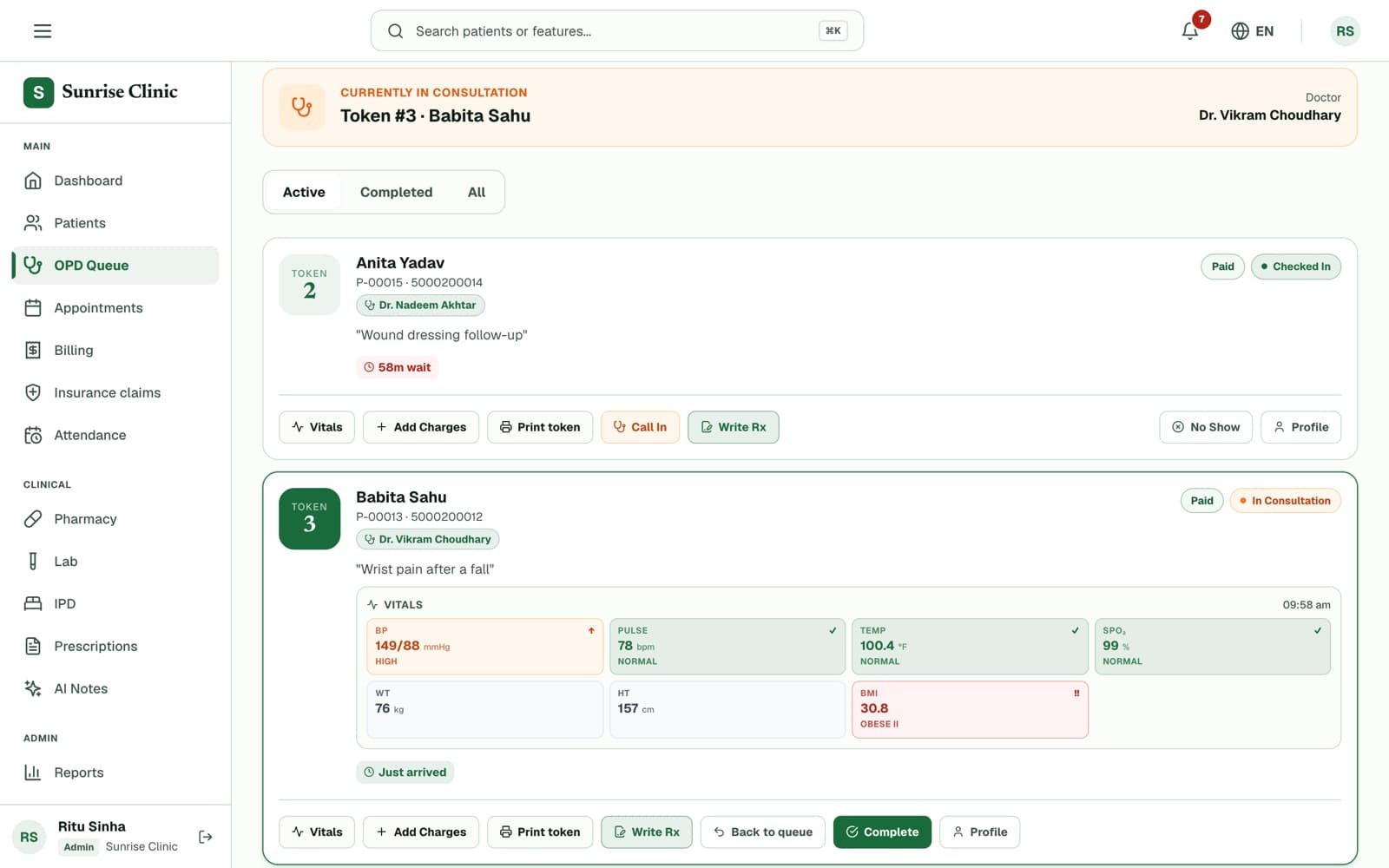
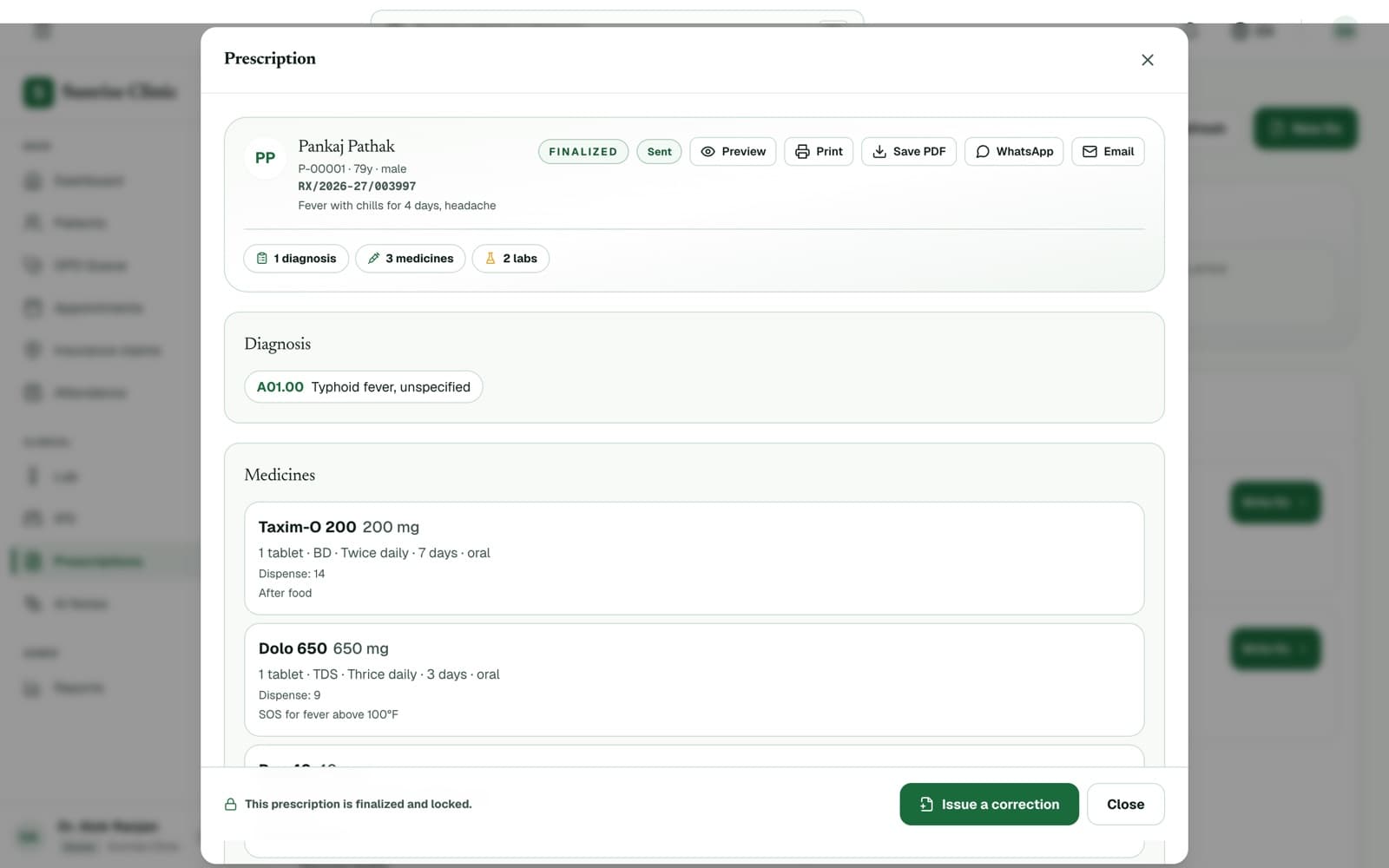
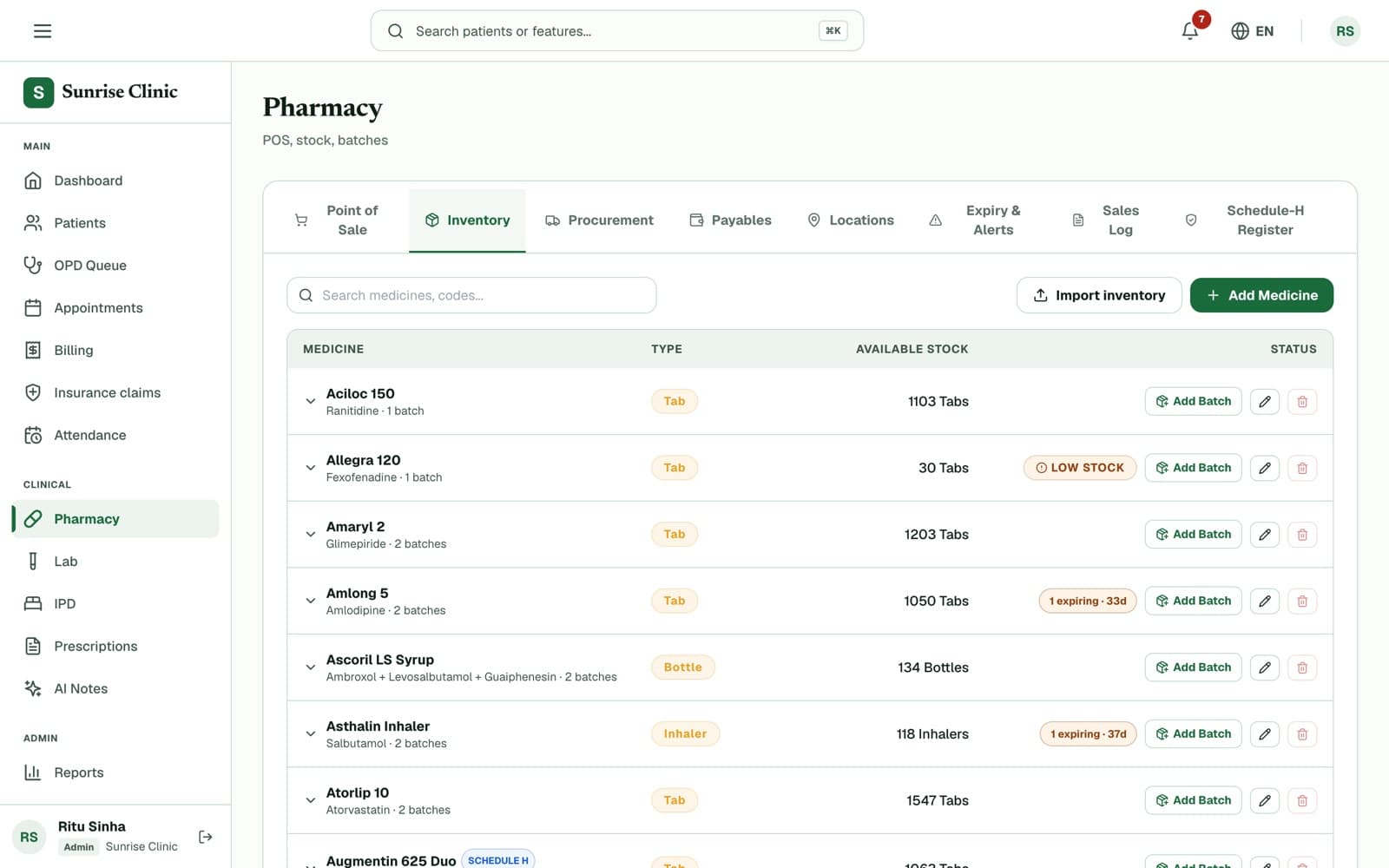
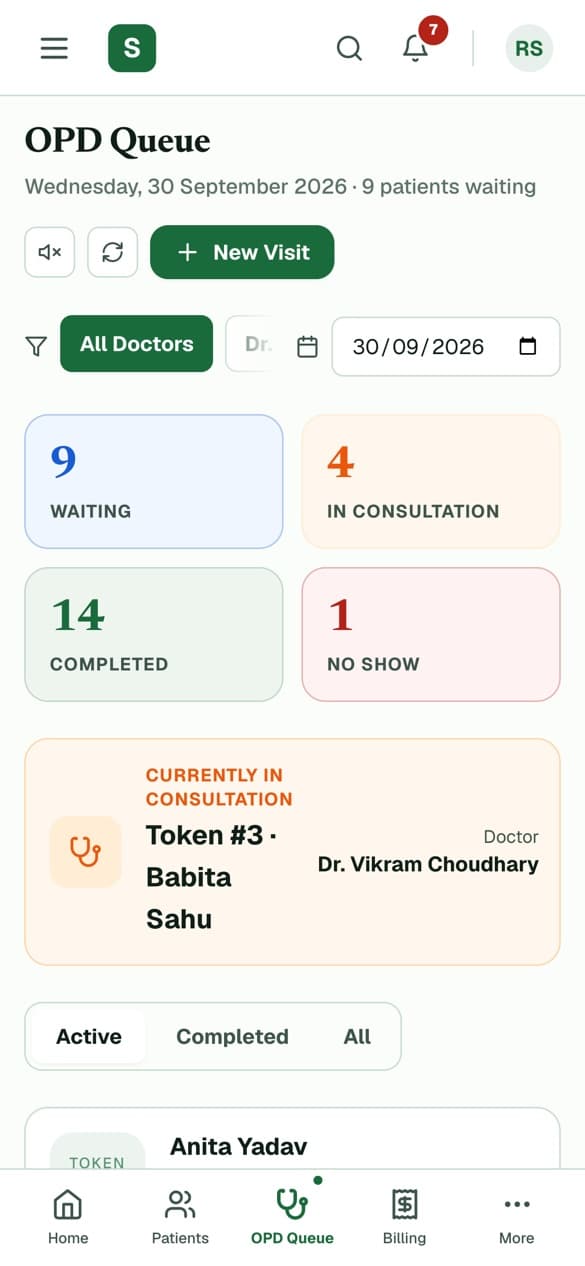
A patient's visit moves through one shared record. Reception registers them and issues a token, and the doctor sees them in a live OPD queue management system built for walk-ins and appointments together. The prescription is written digitally, pharmacy dispenses against it, and the bill picks up every line with the right tax through GST billing software designed for clinics.
Then WhatsApp messaging for clinics takes over: the prescription, the receipt, the lab report and the follow-up reminder reach the patient on the app they already use. You can see every Clinizy Care module and feature on clinizy.in, and plans start at ₹1,999 a month (excluding GST).
- OPD Queue Management
- GST Billing
- Pharmacy & Inventory
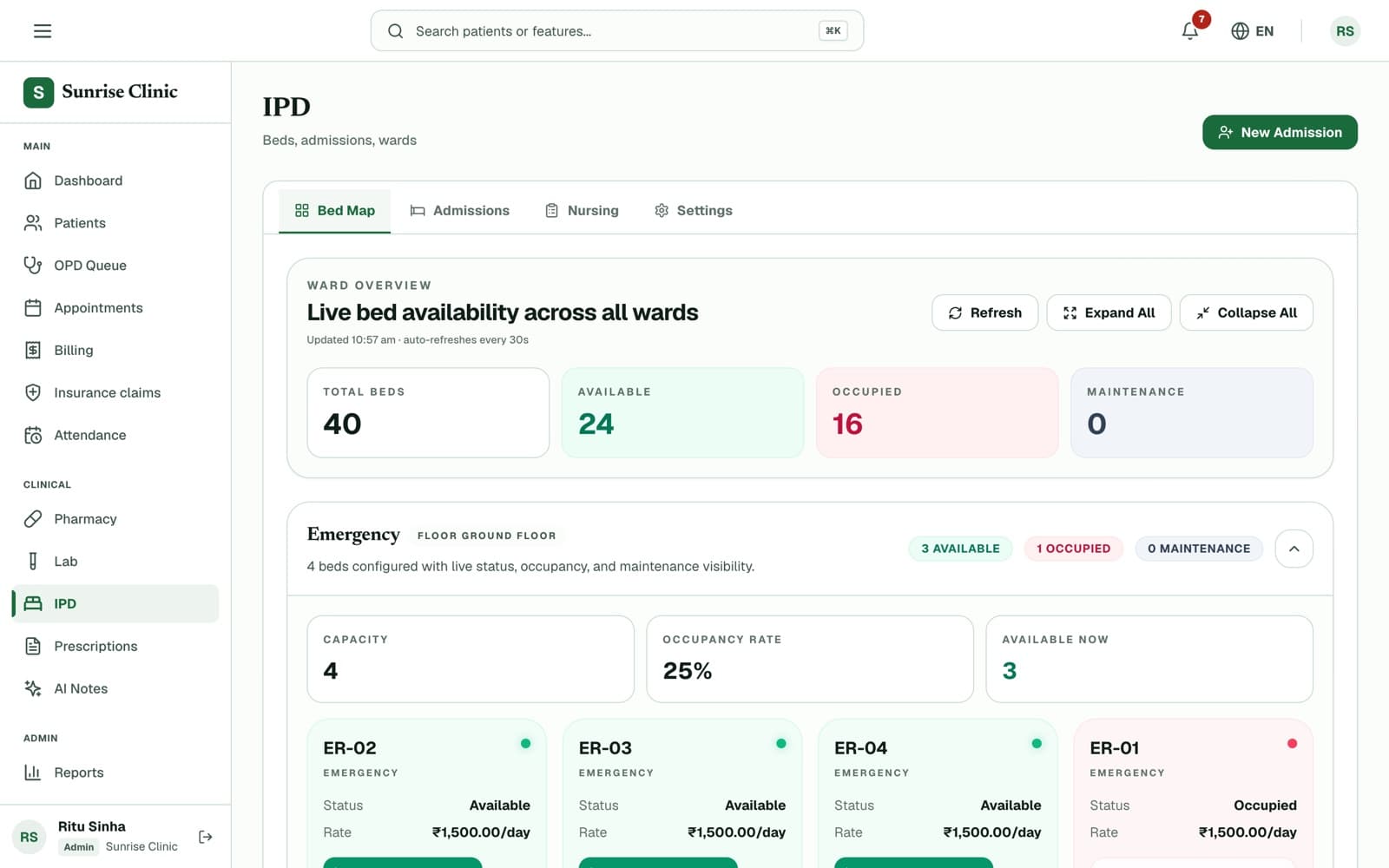
- IPD & Bed Management
- Digital Prescriptions
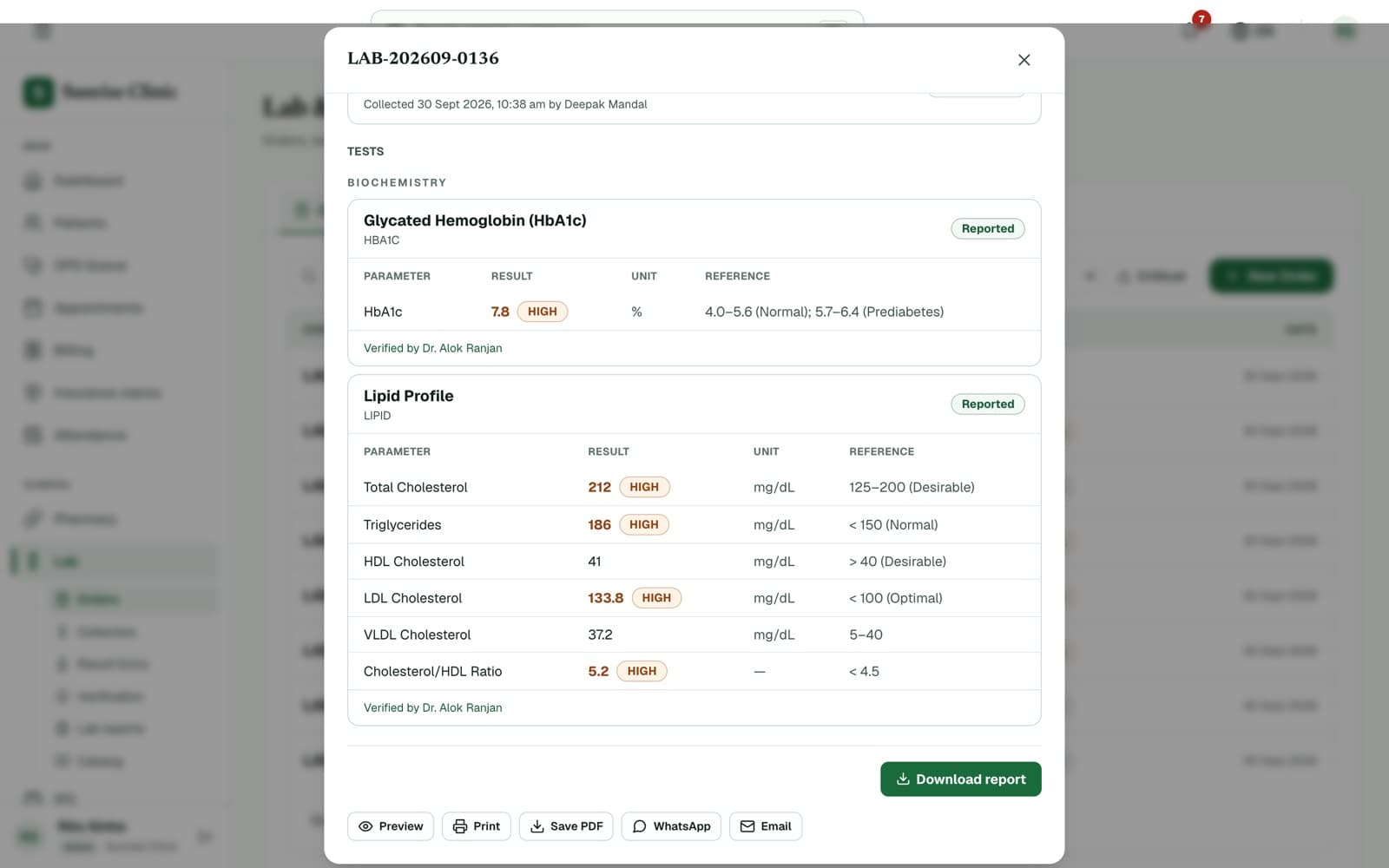
- Lab & Diagnostics
- Appointment Scheduling
- Patient Records
- Reports & Analytics
- AI Clinical DocumentationEarly access
- WhatsApp for Clinics
AI where the minutes are, automation everywhere else
Documentation is where a doctor's day disappears, so that's where we started: Bol drafts structured notes from dictation and is in early access. Saathi, Awaz, Nazar, Buddhi and Setu are next on the roadmap. Around them, 24 automations already handle the repetitive work, from follow-up recalls to critical-result alerts.
The doctor dictates the way they actually talk, and Bol drafts a structured clinical note to review, with a guardrail that rejects non-clinical input. Consult time goes to the patient, not the keyboard.
Illustration of how it works. Bol is in early access; Saathi, Awaz, Nazar, Buddhi, Setu are on our roadmap and not yet available.
- Follow-up recalls
- Refill reminders
- Critical-result alerts
- Near-expiry alerts
Architecture highlights
The decisions that carry the most weight, and where we've written them up in detail.
Multi-tenant, and it fails closed
Every clinic shares the same database but never sees another clinic’s data. A tenant guard is injected into every query, count, aggregate and write. With no tenant in context it returns nothing, and a real-database test suite proves it.
How the tenant guard worksOne codebase, three surfaces
The marketing site, the clinic app and the admin console come from one React and Vite codebase, backed by a Node.js API on MongoDB. Validation schemas and the role-permission matrix are shared by client and server, so they can’t drift.
Queues for everything that leaves the building
WhatsApp messages, emails, PDFs and reports go through AWS queues with dead-letter queues and an idempotent worker, so a slow provider never slows the front desk.
What we learned running WhatsApp at clinic scaleMoney in paise, tax by place of supply
Amounts are integers in paise end to end. CGST/SGST or IGST follows the place of supply, pharmacy MRP is treated as tax-inclusive, and finalized bills are immutable.
Lessons from the GST billing engineIndia-hosted and access-controlled
Hosted on AWS Mumbai and encrypted in transit, with seven staff roles, two-factor sign-in and an audit trail of every change, built to be DPDP Act 2023 aligned.
The DPDP Act for health-tech buildersA live queue on every screen
Server-sent events push the OPD queue to reception, the consulting room and the waiting-room TV at the same moment, and the TV shows patient initials only.
What running it taught us
Building a product is one education. Running it for real clinics every day is another.
Fail closed, then prove it
Our first tenant guard covered reads but not every write path. We extended it to updates, deletes, counts and inserts, then added tests against a real database, because mocked models can’t prove isolation.
Background jobs are production too
In a multi-tenant system one unguarded scheduled job can take every clinic down at once. Every job now runs inside a guard, with a database lock so only one instance runs it.
Time zones are business logic
Indian clinics live in IST, which starts at 18:30 UTC. Financial years, day-close and monthly bill numbers are all computed explicitly in IST, so a late-evening bill lands on the right day.
Hinglish is its own language
A front desk that thinks in Hinglish isn’t served by transliterated English. We ship it as a separate, written-for-humans locale beside English and Hindi, and a parity test fails the build if any string is missing.
Never ship fake data
Early screens had placeholder fallbacks that looked like real bills and records. We removed every one. An honest empty state beats a convincing fake, especially in healthcare.
AI-native, senior-owned
We built Clinizy Care the way we build for clients: AI coding agents draft, senior engineers design, review and own every merge, behind thousands of automated tests.
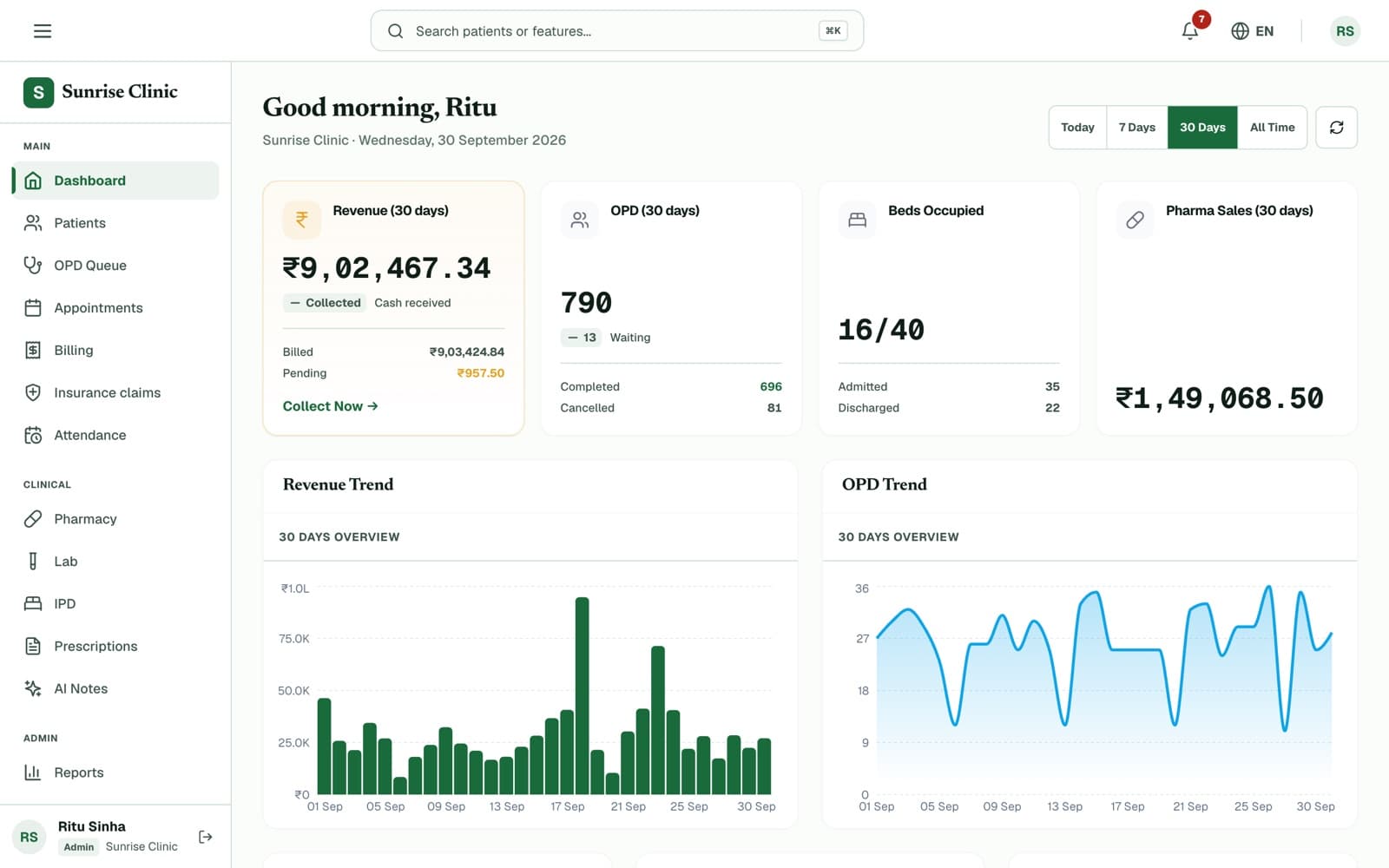
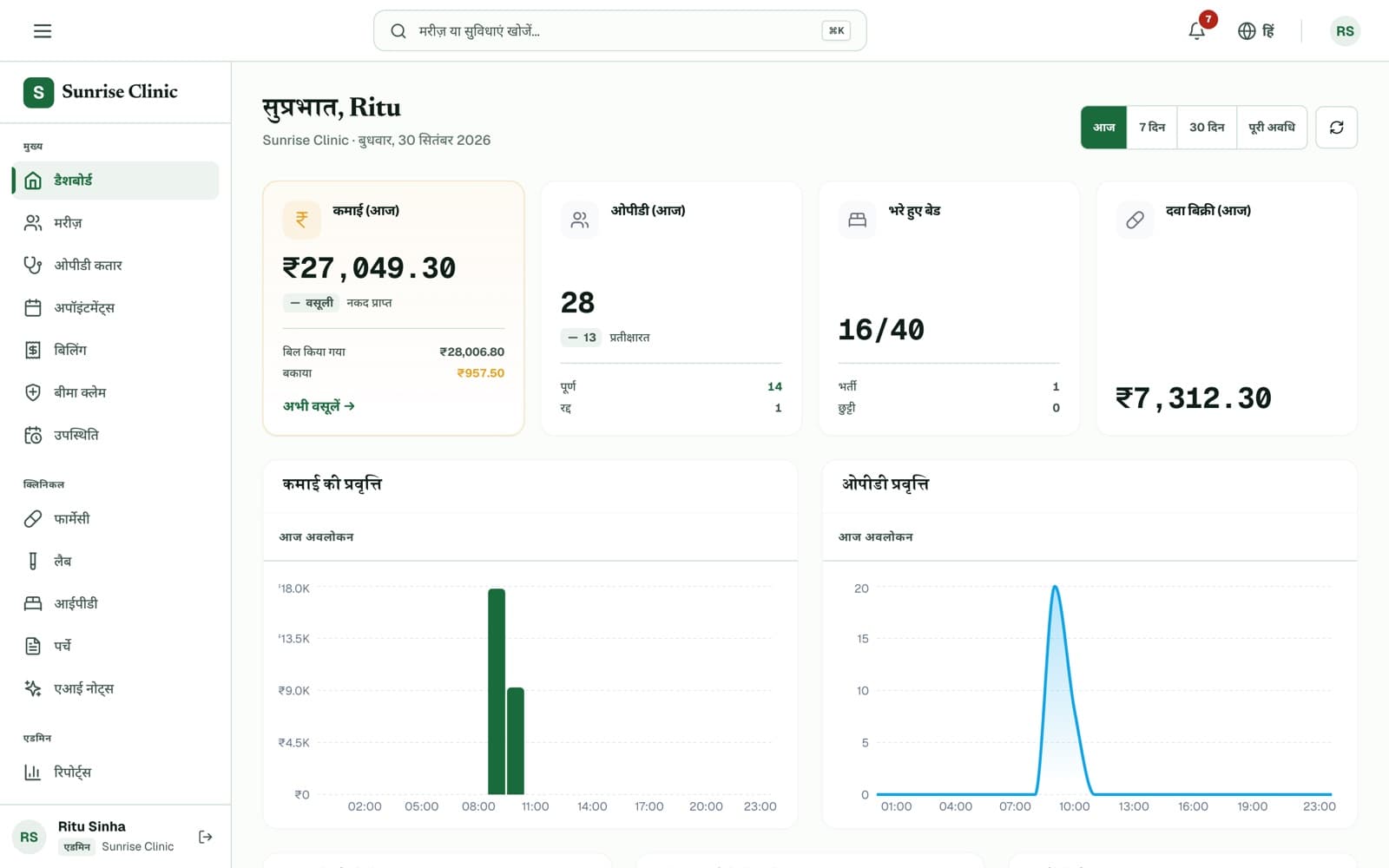
Inside the product
Real screens from Clinizy Care, shown with demo data.
See Clinizy Care for yourself
Every plan starts with a 30-day free trial on clinizy.in, which is the home for the product, its features and its pricing.
Explore Clinizy CareBuilding in healthcare?
The team behind Clinizy Care builds HMS, EMR, billing and patient-messaging software for healthcare founders and providers. Read the Clinizy Care case study or see our healthcare software engineering practice.